


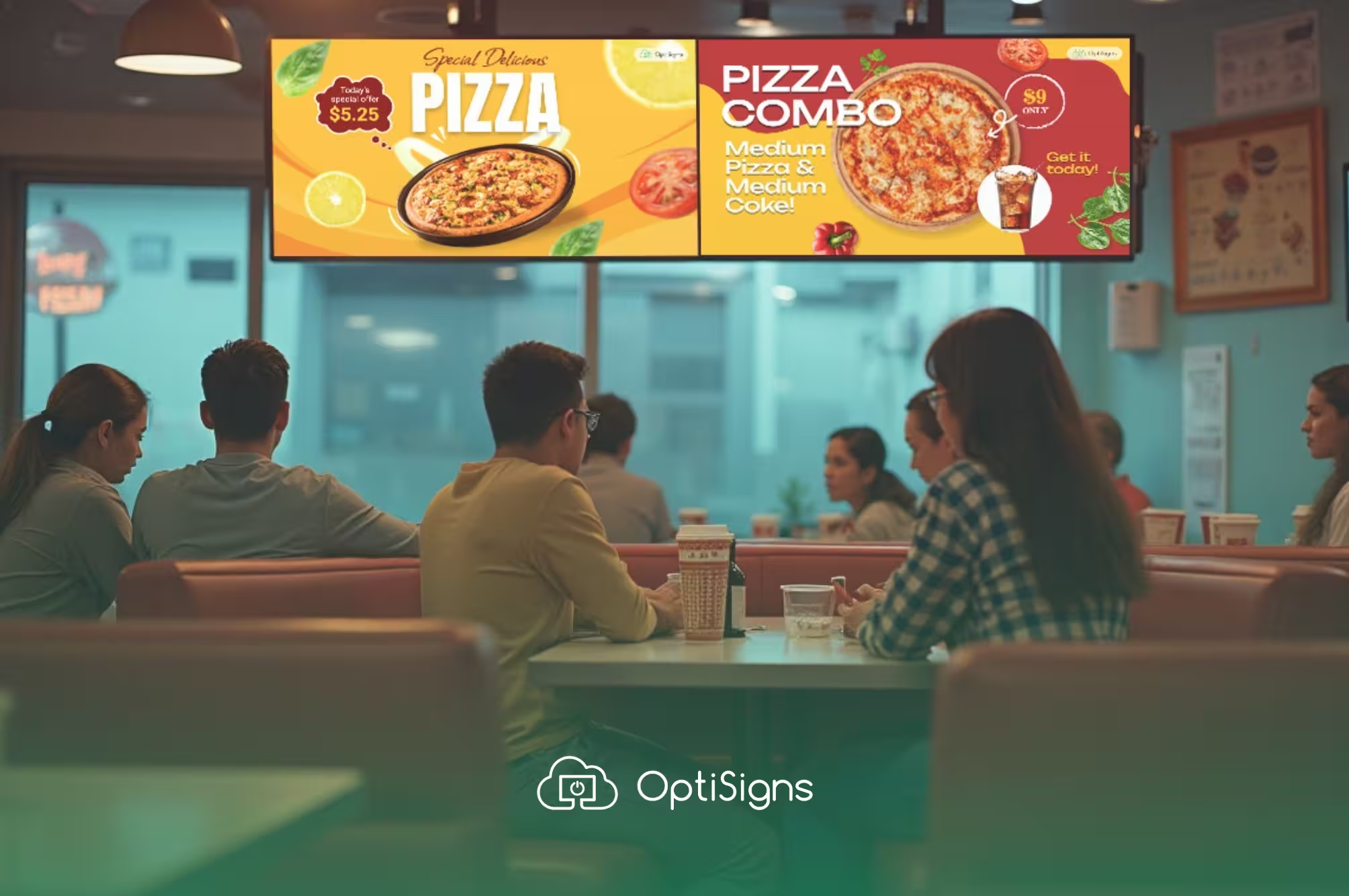
A digital menu board replaces a printed menu with a screen. That's the simple version. The longer version is that a single screen, a small media player behind it, and a signage platform like OptiSigns now run most modern restaurant menus, change prices the moment they need to change, swap breakfast for lunch automatically, and let one manager push an updated chicken sandwich price to every screen at every location from their phone.
This guide covers what restaurant digital signage does for businesses in 2026, where digital menus go beyond the counter, how much they cost, and how to get one live by the end of the day.
What Is A Digital Menu Board
A digital menu board is three things working together:
- A display. Usually a commercial-grade TV or a purpose-built signage screen.
- A media player. A small device that plugs into the back of the screen and powers the digital signage.
- Digital signage software. The platform you use to design the menu, schedule when it appears, and push updates.
The first two are hardware. The third is where digital menu boards become useful. Software is what lets a manager change a price once and have every screen across every location update at the same time.
Why Restaurants Are Switching From Print
Print menus are expensive in ways that don't show up on a single invoice. A reprint cycle, a corrected typo, a 3 PM price change, a new allergen disclosure, and a seasonal LTO all cost money and slow operations down. Digital menu boards are removing a huge part of that overhead.
A Forrester Total Economic Impact study modeled a fictional 150-location QSR chain piloting outdoor digital menu boards at 10 sites. The findings:
The directional picture is consistent across operator reports: a meaningful lift in AOV, faster drive-thru throughput, and print savings that scale with location count.
The other reason restaurants are switching is compliance. Calorie counts, allergen flags, sourcing claims, and price changes are easier to maintain on a screen than on a laminated insert. A price change that used to mean overnight printing and next-morning replacement is now a 30-second update.
Where to Put Digital Menu Boards in a Restaurant

The counter menu is the obvious choice, but not the only one.
- Counter and order point. The primary menu, usually 1-3 screens running horizontally above the order queue.
- Drive-thru preview and order confirmation. A preview board ahead of the order point, and a confirmation board at the speaker post. Outdoor-rated displays for both.
- Self-order kiosks. Touch screens at the entryway or on a stand. The same content stack, just interactive. The OptiKiosk lineup ships with the screen, player, and software pre-configured, so a 10" countertop or 32" floor unit pairs to the same account as your counter menu.
- Window-facing displays. Often used for promos, brand video, or "now open" messaging visible from outside.
- Back-of-house. Kitchen display screens for tickets and prep timers.
Why does this matter? Each of these screens can run on the same platform. A restaurant running OptiSigns for the counter menu can use the same account, the same library, and the same dayparting schedule for its drive-thru and its window display. One system, not five.
What to Display Besides Menus
Dayparting. Breakfast until 10:30, lunch from 10:30 to 4, dinner after that, happy hour from 3 to 6, late-night menu after 10. All of this runs on schedule. No one has to swap a slide manually.
Featured items and LTOs. Promoted items get the eye-level spot. Industry data on animated promoted items shows substantial lift on the specific item being highlighted, which is why fast food brands rotate a "deal of the week" through the corner of the board.
Customer reviews and social proof. A rotating panel of Google and Yelp pulls reinforces the order someone is already about to place.
Loyalty signup and ordering QR codes. A QR code to join the loyalty program or to order from the table is the cheapest way to grow a customer database. For sit-down operators, see our touchless menu guide for QR-code menu setups that pair with the board.
Allergen and nutrition info. Easier to keep current on a screen than on a printed insert.
High-resolution food photography. This is where most boards fall short. Stock photos of food look like stock photos. Operators who shoot their own dishes well consistently outperform the ones who use vendor-supplied imagery.
How Much Digital Menu Boards Cost in 2026
Pricing depends on screen count, hardware tier, and whether the install is single-location or chain-wide. Real ranges for 2026:
Most single-location operators recoup the spend in 9-12 months from a combination of print savings, fewer order errors, and lifts on promoted items. Multi-location operators get there sooner because the print savings compound across every site.
Choosing the Right Hardware
Two important decisions: the display and the player.
Display. A commercial display is rated for 16-24 hours of daily use, handles heat better, and holds image quality longer than a consumer TV. For a screen that runs every minute the restaurant is open, that life expectancy matters. For a low-volume café running 8 hours a day, a consumer TV is usually fine.
Player. The media player is the small box that runs the signage software. Some operators bring their own Android stick. Others use a pre-configured player that ships ready to run, like the OptiSigns Pro Player and OptiStick Android Player. Taking the pre-provisioned route saves the setup time of installing the app, signing in on each device, and configuring kiosk mode. For an operator opening their first board, it is the difference between an hour of setup and an afternoon.
Designing a Menu Board That Sells
.avif)
Layout decisions on a digital menu board are not the same as on a printed menu. The reading distance is longer, the customer is in a queue, and the font has to work for someone glancing up while they decide.
A few rules that hold across concepts:
- Anchor the high-margin item. The top-left or center spot draws the eye first.
- Limit reading load. A guest in line has 5-10 seconds of attention. A 30-item menu spread across one screen does not get read.
- Use category contrast. A different background color or shape for sides, drinks, and combos lets the eye sort the menu without thinking.
- Test from the actual viewing distance. Walk to where the customer stands. If you can't read the calorie count, neither can they.
For operators who want a head start, OptiSigns has free restaurant menu templates in the Designer app. Operators who want an even wider selection can pull from 20,000+ templates through the MustHaveMenus integration. For the broader layout decisions (font sizing, contrast, image weight), our digital sign board design guide is worth a read.
Managing Menu Boards Across Locations
This is where signage software earns its keep time and time again. The reason a regional pizza chain runs digital menu boards is not the screen. It is that one decision maker at corporate can push a new price to every location at the same instant.
OptiSigns handles this by design:
- One library, every screen. Update an item in the master file, every paired display reflects the change.
- Dayparting at scale. Breakfast turns into lunch automatically at 10:30 at every location, including the ones that already opened in a different time zone.
- Permissions for franchise vs. corporate. Franchisees can override local content (a regional LTO, a hiring poster) without touching the core menu.
- Uptime monitoring. A dashboard shows which screens are online and which need attention.
- Remote reboots. A screen frozen on a corrupted template gets fixed from a phone, not a service call.
The Super Chix case study walks through what this looks like for a chain running OptiSigns nationally.
Common Mistakes to Avoid
A short list of the screen slip-ups we see most often:
- Overloading the screen. Six panels, three font sizes, four photo treatments. The customer likely gets overwhelmed and reads none of it.
- Tiny fonts. What looks fine on a laptop preview becomes unreadable at 12 feet.
- Stale content. A "summer special" still rotating in November is worse than no promo at all. Always use scheduling and expiry rules.
- No fallback plan. If the screen goes dark mid-rush, what does the line look like? Pre-print a backup paper menu and keep a copy at the counter.
- Using stock food photography. It's noticeable. Shoot your own.
- Ignoring viewing distance. Always test from where the customer actually stands.
How to Get Started in Under 30 Minutes
A first digital menu board does not need a project plan. The setup looks like this:
- Sign up for OptiSigns. A free 14-day trial includes everything in this guide.
- Pick a template. Create your own menu in the Designer app, browse menu board templates in the template library or upload your own designs with one of our 160+ app integrations.
- Edit prices, items, and photos. Drop in your own food photography. Adjust fonts so they are readable from the back of the line.
- Plug in a player. Either an OptiSigns Pro Player or any Android stick. Pair it to your account with the on-screen code.
- Schedule dayparts. Set breakfast, lunch, and dinner to swap on their own.
- Push the menu live. Every paired screen pulls the update.


