


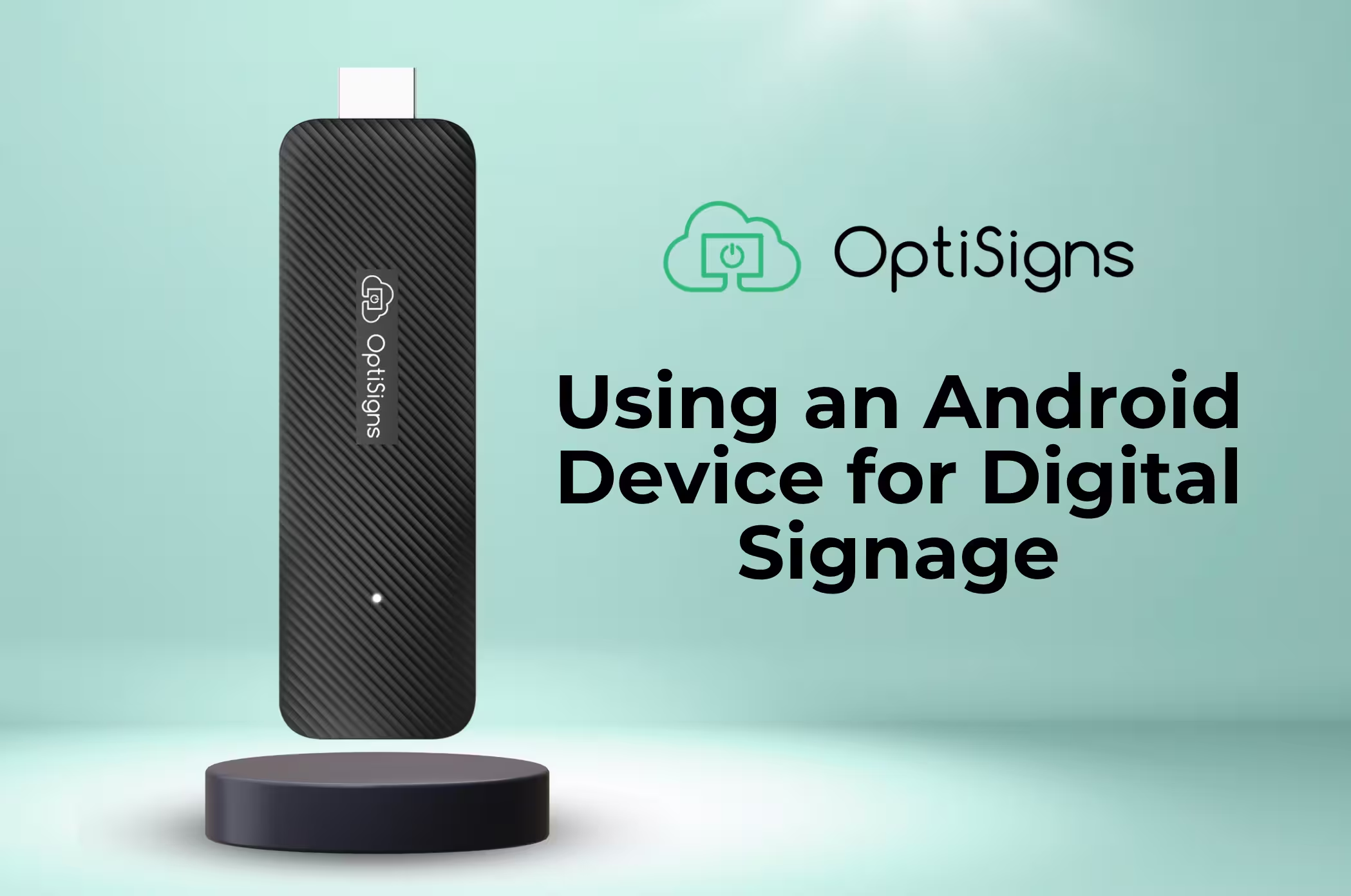
Android powers a large portion of digital signage deployments running today. Menu boards, office lobbies, retail displays, and wayfinding kiosks all run on some version of the platform, and OptiSigns is engineered to run cleanly on virtually every Android device on the market, from $99.99 signage sticks to enterprise-grade commercial players and standard consumer tablets.
The category covers a wide range of hardware, though, and not every Android device is built for the demands of 24/7 playback. A consumer TV box and a purpose-built signage player run the same operating system but behave very differently once they're mounted behind a screen. This guide covers what to look for when selecting Android hardware for digital signage, the 2026 ecosystem changes that affect how these devices get provisioned, and how OptiSigns simplifies the setup process from start to finish.
Why Android is the default for affordable signage
A few reasons Android won this category:
- Hardware variety. Android runs on sticks, set-top boxes, tablets, smart TVs with built-in chipsets, and ruggedized commercial players. You can match the form factor to the install location instead of squeezing a Windows mini-PC onto a wall mount.
- Lower cost floor. Commodity Android hardware undercuts Windows, BrightSign, and Apple signage hardware by a wide margin. A working OptiSigns-ready player starts under $100.
- Fleet management APIs. Modern Android supports Device Owner mode and the Android Management API, which is what powers kiosk mode, auto-boot, remote reboots, and over-the-air updates on commercial signage hardware.
The global digital signage market is now worth roughly $31 billion and is projected to nearly double by 2033 (Grand View Research). A big chunk of that growth is running on Android under the hood, and OptiSigns has spent years building directly on the APIs that make it scale.
Android in 2026 isn't as "DIY-friendly" as it used to be
Android used to be the obvious choice partly because you could grab any device, sideload an APK, and go. That story has gotten more complicated, and it's worth knowing before you go hunting for the cheapest TV box on Amazon.
- Google Play Integrity API changes (May 2025). On Android 13 and newer, signage and management apps now need to be installed by Google Play to get a "strong integrity" verdict. The device also has to have a security update from within the past 12 months. Sideloaded APKs and devices enrolled via QR code, Zero Touch, or NFC may not register as "installed by Google Play," and those fleets can quietly lose integrity verdicts and trigger backend failures (Android Authority, Microsoft Intune support notice).
- Samsung Knox Guard on Android 15+. By default, Samsung now blocks Android Enterprise provisioning on Knox Guard devices manufactured with Android 15 or higher. You have to contact your Samsung rep and unblock provisioning before you can enroll the device. Easy to miss until your deployment stalls (Samsung Knox documentation).
- Amazon Fire OS tightening. Fire OS 8 and later have made sideloading and developer-mode workflows more restrictive on Fire TV Stick hardware, which used to be the go-to cheap signage device.
The era of "buy a random signage stick and wing it" is fading. In 2026, the safest path is hardware that ships pre-provisioned for signage, with the app pre-installed from Google Play and the device ready to auto enroll in a managed account. That's what the OptiStick does out of the box, and it's why most new OptiSigns customers pick it over rolling their own.
Consumer vs commercial Android: the difference that actually matters
A consumer Android TV box was designed for someone to watch Netflix for two hours a night, while a commercial signage player was designed to run flat out for years. You can absolutely use the consumer box for signage, just understand what you're trading.
If you're running five screens in a single office, a consumer box is fine and you can troubleshoot it when something breaks. If you're running thirty screens across a chain of stores and can't drive out to reboot each one, it could be worth it to spend the extra $200 and get something built for it.
Your Android hardware options, ranked by how much work you want to do
There's a simple version and a hard version.
The simple version: a pre-configured OptiSigns player
If you want a screen up and running in under five minutes, check out the OptiStick ($99.99). It's an Android-based signage player that ships pre-configured, pre-paired to your OptiSigns account, and built for 24/7 operation. Plug it into any HDMI display, connect to WiFi, and your content is live. 4K at 60Hz, offline caching, auto-reboot after power loss, and remote management from the OptiSigns dashboard, all handled.
For larger deployments or video walls, the Pro Player ($349) and ProMax Player ($799) step up to commercial-grade hardware with multi-screen video wall support, enterprise network security, and heavier thermal design. Both run Android under the hood, both ship ready to go.
The DIY version: bringing your own Android hardware
If you already own Android devices, or you have a reason to pick your own hardware, OptiSigns runs on pretty much anything with Android 10 or newer. Your main options:
- Consumer Android TV boxes and sticks (Chromecast with Google TV, Xiaomi Mi Box, NVIDIA Shield). Cheap and widely available. Variable quality. You'll do the provisioning, kiosk lockdown, and troubleshooting yourself. Works fine if you only have a few screens and can reach them when something breaks.
- Android tablets (Samsung Galaxy Tab A, Lenovo Tab M). Good for small interactive kiosks, reception sign-ins, and counter-mounted menu boards where you want the screen and player in one unit. Plug into permanent power and OptiSigns handles the rest.
- Smart TVs with built-in Android (Sony, Philips, TCL, Hisense). Install the OptiSigns app from the Play Store directly on the TV, no external player needed. Our smart TV digital signage guide covers which brands work best.
- Repurposed Android phones. Not a joke. An old Pixel or mid-range phone, mounted landscape, makes a credible small sign if you already own it. Works for reception screens, elevators, proof-of-concept installs.
All of these work with OptiSigns. The catch is that you're responsible for the stuff the OptiStick handles automatically: sleep prevention, boot behavior, kiosk lockdown, Play Integrity compliance, remote recovery. That's the next section.
Minimum specs if you're bringing your own hardware
OptiSigns supports Android 10 and newer. Here's the baseline we recommend for reliable playback:
- Android 10+ (Android 12 or newer preferred for kiosk mode and Play Integrity compatibility).
- 2 GB RAM minimum, 4 GB if you're playing 4K video or running multi-zone layouts.
- 16 GB storage for the OS and OptiSigns' local content cache.
- 1080p output as a floor. 4K if the device can actually push frames at that resolution.
- 5 GHz WiFi or Ethernet. Do not deploy signage on 2.4 GHz unless you have no choice. It drops.
Android 15 (released late 2024) pushed OEM minimums to 32 GB storage, 4 GB RAM, and 720p output. If you're buying new, aim above that floor so the device keeps receiving updates.
Our digital signage cost guide compares the real cost of rolling your own hardware vs. buying a pre-configured player once you factor in your own time.
The DIY setup checklist (or, why most customers buy the OptiStick)
A stock Android device does not want to be a sign. It wants to show a launcher, sleep after ten minutes, and nag you about updates. If you're not using a pre-configured player, here's the list you're signing up for:
- Disable sleep. Settings → Display → Sleep → Never. On some devices you'll need to enable developer options (tap Build Number seven times) and turn on "Stay awake while charging."
- Auto-launch the signage app on boot. Set OptiSigns as the default Home app so the device boots straight into it instead of a launcher.
- Kiosk lockdown. Android's Lock Task Mode prevents users from exiting the app, pulling down the notification shade, or wandering into settings. On a consumer device, this means installing a kiosk launcher or enrolling the device as a Device Owner, which is involved and getting harder with the 2025 Play Integrity changes.
- Pause or block Play Store updates so a surprise update doesn't interrupt playback.
- Test reboot survival. Unplug the device, plug it back in, walk away. If it comes back up showing your content on its own, you're good. If it sits on a lock screen, a launcher, or a boot logo, you have more work to do.
None of this is rocket science, and OptiSigns has customers who handle it themselves on stacks of tablets. But every one of these steps is already done on the OptiStick, Pro Player, and ProMax Player. That's what you're paying for when you buy a commercial signage player instead of a $40 TV box.
Managing Android signage at scale
As a signage deployment grows beyond a handful of screens, the operational challenge shifts from hardware selection to fleet management. Maintaining dozens or hundreds of displays across multiple locations requires centralized control over content, device status, and troubleshooting.
OptiSigns is designed to handle this natively. The OptiSigns dashboard provides remote content updates, screen status monitoring, reboot commands, playback diagnostics, and content caching across any number of paired Android devices. OptiSticks, tablets, smart TVs, and commercial players all appear in the same unified view, with the ability to push content updates, restart a non-responsive screen, or modify a single display's schedule from the web dashboard or mobile admin application.
For signage-only fleets, OptiSigns includes all of the fleet management functionality required to operate at scale. A separate Mobile Device Management (MDM) solution such as Esper or Scalefusion is not required, nor is a third-party kiosk application. The OptiSigns application functions as both the signage player and the kiosk lockdown, and the dashboard serves as the fleet manager.
For mixed-use fleets, such as environments where the same tablets are used for point-of-sale during business hours and signage outside of them, a dedicated MDM may still be appropriate. For deployments that are exclusively dedicated to digital signage, OptiSigns provides the complete management stack.
Getting started with OptiSigns on Android
If you want to skip the hardware research entirely:
- Buy a pre-configured player. The OptiStick ships already linked to your account. Plug it into HDMI, connect to WiFi, done.
- Or install the app yourself. Download OptiSigns Digital Signage from the Google Play Store (search "OptiSigns"). Installing through Play Store is the preferred path on Android 13+ since it keeps Play Integrity verdicts intact. Sideloading the APK still works for quick testing, but expect to re-enroll through Play Store for long-term deployments. Open the app, pair it to your account with the on-screen code, and start assigning content.
- Pair and push content. Any screen you've paired shows up in your OptiSigns dashboard. Drag content onto it and it plays.
- Manage remotely. The OptiSigns Admin app (also on Google Play) lets you adjust content, reboot screens, and troubleshoot from your phone.
For a more detailed look at how the system fits together, our beginner's guide to using digital signage covers content, scheduling, and placement.


