


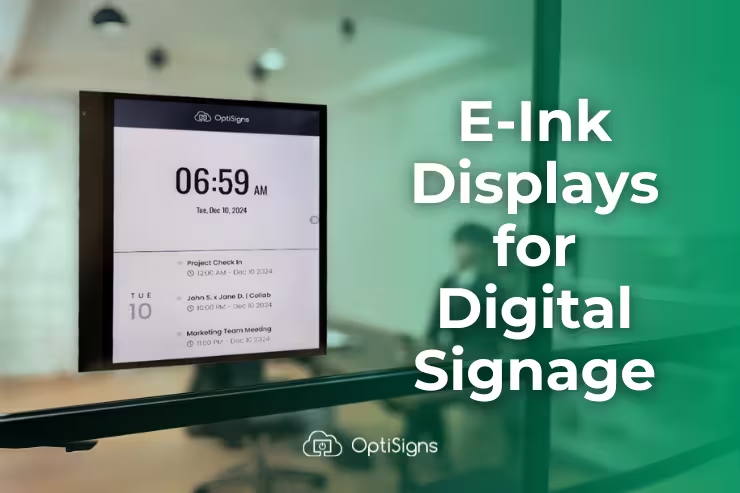
E-ink screens look like paper, use almost no power, and stay readable in direct sunlight. For digital signage that displays text, schedules, or pricing, they outperform traditional screens in many ways. E-Ink displays are a prime example of how versatile solutions are reshaping the industry.
Here's what e-ink does well, where it falls short, and how to decide if it's the right fit for your signage needs. Let's dive in!
What Are E-Ink Displays?
E-Ink, short for electronic ink, is a display technology designed to mimic the look and feel of ink on paper. E-Ink displays are different from traditional digital displays; they do not use bright colors or backlighting. Instead, they reflect light, making them easy to read in bright places.
E-Ink screens have tiny microcapsules. These microcapsules contain black and white particles in a clear liquid that respond to electrical charges. This creates the text or images we see on the screen that resembles electronic paper.
With Ereaders, such as the Amazon Kindle, becoming increasingly popular, companies have expanded on the capabilities and variety of these displays. With Android-based tablets and displays, like this one from Bigme, coming out, you can deploy OptiSigns on these supported systems. These developments have expanded the versatile uses of E-Ink and what it can be used for.
Benefits of E-Ink for Signage
Sunlight readability. E-ink reflects ambient light the way paper does. No backlight means no glare or washout. Where LCD screens struggle outdoors or near windows, e-ink stays sharp.
Near-zero power consumption. An e-ink display can use as little as 0.008% of the daily power an LCD requires. Battery-powered e-ink signs can run for months on a single charge, eliminating the need for wired power in some installations.
Eye comfort. With no backlight, there's also no flicker and no blue light emission. For digital signage that people read up close — patient info boards, shelf labels, meeting room schedules — that matters.
Durability. Without a backlight to burn out, e-ink screens last longer than LCD panels. They're also lighter and thinner, making wall mounting simpler.
Sustainability. Lower power consumption means a smaller carbon footprint across your signage network. For organizations tracking ESG goals, e-ink is a straightforward win.
E-Ink vs. LCD: When to Use Each
E-ink isn't a replacement for LCD — it's a complement. Each technology has a clear lane.
Use e-ink when your content is mostly text and updates infrequently — menus, schedules, directories, shelf labels, room bookings. The power savings and sunlight readability justify the higher upfront cost over time.
Use LCD when you need video, animation, bright colors, or real-time dashboards. For meeting room screens that switch between dashboards and wireless presenting, LCD is the better fit.
Use both when your location has different signage needs. A restaurant might use e-ink for the outdoor menu board (sunlight readable, low power) and LCD for the indoor promo screen behind the counter (video, color).
Where E-Ink Signage Works Best
Retail: Shelf Labels and Pricing
Electronic shelf labels (ESLs) are the largest e-ink signage market. Retailers update pricing across thousands of labels from a central system — no more printing and replacing paper tags. The displays stay readable under store lighting and last years on a small battery.
Beyond pricing, e-ink shelf tags can show product ratings, stock status, and QR codes linking to product pages.
Offices: Room Schedules and Directories
E-ink panels outside meeting rooms display today's bookings pulled from Google Calendar or Outlook. The screen updates when a meeting starts or ends and draws no power in between. Wall-mounted e-ink directories in lobbies show floor maps and tenant listings that update as tenants change.
Healthcare: Patient Info and Wayfinding
Hospital room displays showing patient name, allergies, and care instructions stay visible 24/7 without power. Wayfinding signs in hallways and lobbies direct visitors without the glare and maintenance of backlit screens. The lack of blue light emission is a plus for patient-facing environments.
Transit and Public Spaces
Bus and train schedules on e-ink boards stay readable in full sun and rain (with IP-rated enclosures). Airports use e-ink for gate and flight information displays that update periodically rather than continuously.
Hospitality: Menus and Event Boards
Restaurant menu boards, hotel event schedules, and conference room listings are naturally text-heavy and update a few times per day at most — ideal for e-ink's strengths.
Limitations of E-ink Displays
E-ink isn't right for every signage scenario. Be honest about the trade-offs before investing:
- No video or animation. E-ink refresh rates are measured in seconds, not frames per second. If your content includes motion, stick with LCD.
- Limited color. Color e-ink exists (E Ink Spectra 6 now supports full color) but colors appear muted compared to LCD. High-impact visual branding may not translate well.
- Higher upfront cost. A 32" e-ink panel costs 3-5x more than a comparable LCD. The ROI comes from lower operating costs over years, not months.
- Slower content updates. Each screen refresh takes a few seconds and may show brief ghosting. For content that changes every few minutes, this is noticeable.
- Smaller size range. Most e-ink signage panels top out at 32". Larger options (up to 75") are emerging but remain expensive and limited in availability.
How OptiSigns Works with E-Ink Displays
OptiSigns lets you manage e-ink screens the same way you manage any other display in your network. Upload content, schedule updates, and push changes remotely from the OptiSigns dashboard.
What this means in practice:
- One platform for all screens. Manage your e-ink shelf labels, LCD lobby screens, and Power BI dashboards from a single account.
- Scheduled content. Set a lunch menu to display at 11 AM and a dinner menu at 5 PM. OptiSigns handles the switch.
- Remote management. Update signage across multiple locations without touching the hardware. Change a price, push it to 500 shelf labels at once.
- Supported formats. Push images (JPEG, PNG, BMP) and static content designed for e-ink's resolution and refresh characteristics.
The Future of E-Ink in Digital Signage
At OptiSigns, we are excited about the future of E-Ink technology in digital signage. With advances in color, flexibility, and interactivity, E-Ink displays are becoming even more versatile in displaying different types of content. As the technology evolves, we envision E-Ink being integral to smart cities, sustainable business practices, and interactive signage that creates richer, more engaging user experiences.
Final Thoughts
E-Ink displays are an exciting and energy-efficient addition to any digital signage landscape, offering unique benefits that traditional screens can’t match. Whether you are looking to replace paper signage, improve readability in bright environments, or reduce energy consumption, E-Ink displays offer a sustainable solution for modern businesses. With OptiSigns, you can easily integrate and manage your E-Ink displays, ensuring your digital signage is both cost-effective and high-performing.
If you’re ready to explore the potential of E-Ink displays for your digital signage network, OptiSigns is here to help you make the transition smooth and efficient.


